In this post you'll find 3 short films, sourced from the depths of the internet to give me the foundation understanding which i can use to construct my own film. I found that the majority of the time i became bored by most of the short movies so at least the preliminary research has shown me how important it is to begin my short movie with an effective and gripping intro and ending. Another thing to be aware of is the fact that most short movies found on YouTube last over 10 minutes. For myself, the task is much more challenging; for the A-level specification I am required to compress the footage i take into only a 5 minute film. Below are a few of the short films you may find interesting; one short film projects the anxiety felt by many young adults based on being self-conscious. The second is a Sci-Fi/ dystopian film which shows a society where women are the dominant sex, and that being heterosexual is seen as being wrong. The third short movie is much longer, made by a YouTuber around the same age as me. You can find a list of his works on IMDB which similarly to the video below, tells stories about an individual's struggle to overcome a difficulty, in this case his friend's suicide.
Saturday, 6 September 2014

Friday, 5 September 2014
Research: Viral Marketing Case Study (Cloverfield)
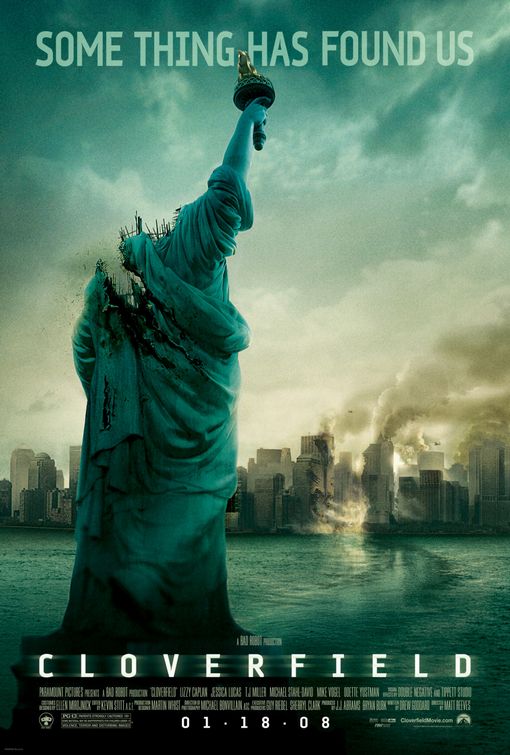
Cloverfield (2008)
Genre: Action/ Sci-Fi/ Thriller
Box Office: $170, 764, 026
Budget: $25 million
Distributor: Paramount Pictures
Studios: Bad Robot Productions
Following the film's release of the trailer, a teaser site (www.1-18-08.com) was created to provide exclusive pictures which built hype for the public. An additional viral website was put online (www.slusho.jp) for a fictional Japanese drink which was penned as subtly giving clues about the film. Moreover another film was made (http://www.tagruato.jp/) with an interactive map of a company's drilling operations, specifying their rigs. Along with these viral marketing campaigns came vlogs by the main characters. More information on this can be found here. Furthermore 8 fake news clips, all in different languages were published online, documenting the destruction of an oil rig in the middle of the Atlantic Ocean. To avoid confusion and worry to the public, subtle details that the videos were part of the campaign, were employed. By using so many different viral campaigns, developed in extravagant detail, Cloverfield was able to create and sustain a deeply tangible story.
Box Office: $170, 764, 026
Budget: $25 million
Distributor: Paramount Pictures
Studios: Bad Robot Productions
Following the film's release of the trailer, a teaser site (www.1-18-08.com) was created to provide exclusive pictures which built hype for the public. An additional viral website was put online (www.slusho.jp) for a fictional Japanese drink which was penned as subtly giving clues about the film. Moreover another film was made (http://www.tagruato.jp/) with an interactive map of a company's drilling operations, specifying their rigs. Along with these viral marketing campaigns came vlogs by the main characters. More information on this can be found here. Furthermore 8 fake news clips, all in different languages were published online, documenting the destruction of an oil rig in the middle of the Atlantic Ocean. To avoid confusion and worry to the public, subtle details that the videos were part of the campaign, were employed. By using so many different viral campaigns, developed in extravagant detail, Cloverfield was able to create and sustain a deeply tangible story.
Research: Methods of promotion
The main aim of promoting a film is to get it seen by as many people as possible in order for the institutions to attain the highest value of capital they can possible achieve. For a short film this is very similarity the case, where it's promoted to gain money but also as a teaser for a feature film; the success off the back of the small film will then act as a guide for how how much success can be predicted for the full length feature film. For example, before Warp Films created Tyrannosaur, they made a short film named Dog Altogether which received a BAFTA for Best Short Film and a Silver Lion for Best Short Film at the Venice Film Festival. This showed Warp Films that they could safely invest their money into making Tyrannosaur because there was an audience who would support it.
Film promotion is done in several ways; notably the producers promote through using technology in order to grab the audiences' attention and build hype for the film. Below are some of the ways a film is promoted.
Heritage
Heritage marketing simply means non digital forms of marketing e.g. posters, cinema trailers etc. Due to the rapid growth and development of technology this method however cannot be used on its own to promote a film and get it seen by the right people (target audience), although it was certainly the only way we could promote a film roughly 20-30 years ago.
Digital
Digital marketing is digital forms of marketing e.g. trailers, websites etc. Under this term comes pull marketing and push marketing. As said, the expansion of technology has changed how we promote films but also how the audience can come into contact with it. Push marketing is marketing the distributor/promoter places specifically for the audience to come into contact with e.g trailers, TV adverts. Whereas Pull marketing is marketing the target audience locates and seeks out themselves e.g. source the website, go on YouTube etc.
Advantages
Digital technology has offered a logistics-light, cost-effective, and efficient dynamic, promotion strategy for institutions to promote their film. It has meant that now all institutions have the power to promote their film globally, because it isn't as expensive as it once was to do this. Digital technology has also meant that a wider audience can be reached and therefore more people will be likely to watch the film, raising a greater degree of profit for the film.
Viral Marketing
Viral marketing is the spreading of information on the internet, slowly releasing information about the film e.g. social media. Building hype is the central purpose of viral marketing, to keep fans interested and making them feel that they have to 'earn' the knowledge about an upcoming film. Viral marketing has the advantages of low costs, higher credibility and like digital marketing, higher efficiency. 2012 film The Dark Knight Rises created a fictional file for a criminal investigation which was posted online at the film's site, TheDarkKnightRises.com, which included a press release explaining how Batman had left graffiti drawings of bolts around the world. The public had to submit photographic evidence on Twitter or email to gain an exclusive frame of the film's upcoming trailer. This is just one example of how hype was created. However, whilst viral marketing is in many ways, a revolutionary form of marketing it doesn't guarantee a film will 'go viral'.
Fortunately it is just as easy, if not simpler to promote a short film over social media.
Web 2.0
A final way films are promoted is through web 2.0. Web 2.0 is associated with web application that facilitate interactive information sharing e.g. YouTube, Twitter, Facebook etc. It allows uses to interact with other users or to alter web content.
Film promotion is done in several ways; notably the producers promote through using technology in order to grab the audiences' attention and build hype for the film. Below are some of the ways a film is promoted.
Heritage
Heritage marketing simply means non digital forms of marketing e.g. posters, cinema trailers etc. Due to the rapid growth and development of technology this method however cannot be used on its own to promote a film and get it seen by the right people (target audience), although it was certainly the only way we could promote a film roughly 20-30 years ago.
Digital
Digital marketing is digital forms of marketing e.g. trailers, websites etc. Under this term comes pull marketing and push marketing. As said, the expansion of technology has changed how we promote films but also how the audience can come into contact with it. Push marketing is marketing the distributor/promoter places specifically for the audience to come into contact with e.g trailers, TV adverts. Whereas Pull marketing is marketing the target audience locates and seeks out themselves e.g. source the website, go on YouTube etc.
Advantages
Digital technology has offered a logistics-light, cost-effective, and efficient dynamic, promotion strategy for institutions to promote their film. It has meant that now all institutions have the power to promote their film globally, because it isn't as expensive as it once was to do this. Digital technology has also meant that a wider audience can be reached and therefore more people will be likely to watch the film, raising a greater degree of profit for the film.
Viral Marketing
Viral marketing is the spreading of information on the internet, slowly releasing information about the film e.g. social media. Building hype is the central purpose of viral marketing, to keep fans interested and making them feel that they have to 'earn' the knowledge about an upcoming film. Viral marketing has the advantages of low costs, higher credibility and like digital marketing, higher efficiency. 2012 film The Dark Knight Rises created a fictional file for a criminal investigation which was posted online at the film's site, TheDarkKnightRises.com, which included a press release explaining how Batman had left graffiti drawings of bolts around the world. The public had to submit photographic evidence on Twitter or email to gain an exclusive frame of the film's upcoming trailer. This is just one example of how hype was created. However, whilst viral marketing is in many ways, a revolutionary form of marketing it doesn't guarantee a film will 'go viral'.
Fortunately it is just as easy, if not simpler to promote a short film over social media.
Web 2.0
A final way films are promoted is through web 2.0. Web 2.0 is associated with web application that facilitate interactive information sharing e.g. YouTube, Twitter, Facebook etc. It allows uses to interact with other users or to alter web content.
Research: Distribution
Currently distribution is dominated by US Conglomerates, including Walt Disney, Universal and Twentieth Century Fox to name a few. This is mainly due to the fact that the capital available is much higher than for independent feature films such as those created by the UK film industry. In relation to this industry, there is independent distribution in the UK which includes Pathé, the Entertainment Distribution Company and Momentum (Pictures).
On average, the distributor will receive 40% off of box office revenues, 30% of which is spent on marketing, promotion, prints, certification and administration. It's the role of the distributor's to do one or more of these following tasks (and more):
On average, the distributor will receive 40% off of box office revenues, 30% of which is spent on marketing, promotion, prints, certification and administration. It's the role of the distributor's to do one or more of these following tasks (and more):
- Acquire a film
- Acquire DVD distribution rights
- Arrange promotional partnerships
Distribution can be divided into 3 groups: publicity and marketing (promotion), film sales and circulation (copies to cinema). It's up to the distributor to decide whether a film needs a saturation (700-1000 prints) or an art house release (20 prints). They also need to consider when the film should be released. This can depend on the target audience. For example, if the film being promoted/distributed is aimed at families, ideally the film would be released in the summer holidays. However if the film is intended to be seen by adults then the award season would be a more beneficial time to distribute the film (Jan-March).
For something to be distributed it can be done in several ways: through television (airline, digital etc.), theatre, the internet and physically distributed. With regard to the theatre, a film, and short film alike can be distributed through being previewed at film festivals, community screenings, within art-houses and/or cinema chains. As for the internet, websites promoting the films are created, as well as apps, streaming sites and subscription platforms are all available where the audience has direct and instant access to your film. Finally with physical distribution, dvds, books, comics, posters, merchandise, bluray, and flash drives are all other options which the audience can choose to find out more about about a film and is yet a selection of ways a film can be distributed, promoted and therefore seen by more and more people worldwide.
Case Study
On the website, Short of the Week, I stumbled across a case study for a well distributed short film, promoted with surprising success, and only achieved through patience and determination. The film, The Thomas Beale Cipher by Andrew Allen and Jason Sondhi was an award-winning film. Distributed both online and at festivals, the makers collated the analytics from both to find out what gained them the most attention and secured business and distributor interest from established companies. These can be found here with further information on the case also.
At the end of it all, it proved that in fact distributing the way they did online, afforded them more attention both from the target audience and industries who had interest in the film. It also cost them nothing to do all of this, something that had enabled them the greatest viewer-ship of all, providing the most benefits. Although this is a 2011 case study, already back then the internet was growing in importance and popularity. Now however it is a fundamental asset to distributing a film. To see that it had such a huge impact on this short film, even back in 2011, just shows that despite distributing for festivals like most full length feature films do, for a short it's just as important, if not more, that a film is distributed/ promoted online.
For something to be distributed it can be done in several ways: through television (airline, digital etc.), theatre, the internet and physically distributed. With regard to the theatre, a film, and short film alike can be distributed through being previewed at film festivals, community screenings, within art-houses and/or cinema chains. As for the internet, websites promoting the films are created, as well as apps, streaming sites and subscription platforms are all available where the audience has direct and instant access to your film. Finally with physical distribution, dvds, books, comics, posters, merchandise, bluray, and flash drives are all other options which the audience can choose to find out more about about a film and is yet a selection of ways a film can be distributed, promoted and therefore seen by more and more people worldwide.
Case Study
On the website, Short of the Week, I stumbled across a case study for a well distributed short film, promoted with surprising success, and only achieved through patience and determination. The film, The Thomas Beale Cipher by Andrew Allen and Jason Sondhi was an award-winning film. Distributed both online and at festivals, the makers collated the analytics from both to find out what gained them the most attention and secured business and distributor interest from established companies. These can be found here with further information on the case also.
- The plan for distribution across the web was put into several steps sure to help the makers finally reach a standard where their film would grab the attention of industry experts. The first of these was to publish the film on Vimeo. YouTube was likely to afford them more viewers, however Vimeo would ensure the right viewers would see the film. Since this article was published in 2011 it's not as likely that this case stands today, since as we know, YouTube is becoming a major video-based site where people will look to find short films and promote them, simply because of ease.
- Secondly, posting a film early was likely to give the film a full day to gain lots of views and is something that this film was posted with in mind (Monday morning).
- Allen and Sondhi used Short of the Week to enable their short film to be shared to a viewer-ship of similar film makers and industry experts, looking to distribute and promote the next big short films.
- Social Media. It was important for the crew to get together and share this film across social networking sites such as Facebook and Twitter since it was on these that a film's popularity could really grow. Today it is even more useful and important that films use these, as when one person sees the film, they will share it to friends who we share it to other friends and so on-meaning the film can be noticed globally and therefore retain popularity on a global scale.
- Targeting key institutions/ bodies. Through emailing individuals of companies or companies directly themselves who might be interested in the film, it was important for Allen and Sondhi to get them to adopt an interest in the film so that they might share it. This is also the case for blogs with major view counts. If a film can be shared this way then it is more likely industry experts are to take an interest in the film and that a film will be available to a wider, global audience.
At the end of it all, it proved that in fact distributing the way they did online, afforded them more attention both from the target audience and industries who had interest in the film. It also cost them nothing to do all of this, something that had enabled them the greatest viewer-ship of all, providing the most benefits. Although this is a 2011 case study, already back then the internet was growing in importance and popularity. Now however it is a fundamental asset to distributing a film. To see that it had such a huge impact on this short film, even back in 2011, just shows that despite distributing for festivals like most full length feature films do, for a short it's just as important, if not more, that a film is distributed/ promoted online.
Research: Narrative Theory
In addition to the notes I made on Vladamir Propp and his discussion of narrative, he added to his own theory by identifying what he called 'narratemes'. Simply put, the narrateme is an event that essentially drives the narrative forward, sometimes diverting it off into a different direction; however this isn't an evident feature to have been used in every story.
Claude Levi-Strauss
Levi-Strauss was a French academic who believed that our understanding of words originated from their opposites rather than the meaning of the words themselves. For example, our idea of a hero derives from our association of the binary opposite e.g. antagonist. He importantly went on to say that oppositions helped people to understand the ideas and associations between binary oppositions such as masculinity/ femininity, good/evil etc. It was also evident that within particular societies, one opposition is commonly favoured more than the other. For example, a lot of people prefer good to evil because of the connotations of being good.
Structuralism
Within film, structuralism simply looks at how films convey meaning through the use of codes and conventions (e.g. camera shots), in the same way language varies/ changes meaning through communication. Many features can be used to convey this, which is why structuralism can be quite a complex theory. For example, dark lighting using a blue filter might be used to convey an early night/ early morning scene providing us with the understanding that the scene is set during a particular time of day. However when you add low, ominous music, the mood immediately changes, especially when quick cuts/ shaky shots are used to give the reading that the the film is a horror. It is conventional for horror films to use such features, showing that the meaning can be changed through the slightest edit technique; ultimately this effects the meaning of the film.
Roland Barthes' Narrative Codes
Barthes believed that narrative works with different codes involved, causing the audience to want to make sense of them. There were several he identified. These included:
Claude Levi-Strauss
Levi-Strauss was a French academic who believed that our understanding of words originated from their opposites rather than the meaning of the words themselves. For example, our idea of a hero derives from our association of the binary opposite e.g. antagonist. He importantly went on to say that oppositions helped people to understand the ideas and associations between binary oppositions such as masculinity/ femininity, good/evil etc. It was also evident that within particular societies, one opposition is commonly favoured more than the other. For example, a lot of people prefer good to evil because of the connotations of being good.
Structuralism
Within film, structuralism simply looks at how films convey meaning through the use of codes and conventions (e.g. camera shots), in the same way language varies/ changes meaning through communication. Many features can be used to convey this, which is why structuralism can be quite a complex theory. For example, dark lighting using a blue filter might be used to convey an early night/ early morning scene providing us with the understanding that the scene is set during a particular time of day. However when you add low, ominous music, the mood immediately changes, especially when quick cuts/ shaky shots are used to give the reading that the the film is a horror. It is conventional for horror films to use such features, showing that the meaning can be changed through the slightest edit technique; ultimately this effects the meaning of the film.
Roland Barthes' Narrative Codes
Barthes believed that narrative works with different codes involved, causing the audience to want to make sense of them. There were several he identified. These included:
- Enigma Code: this refers to a mystery within the film. Although clues are dropped in, the 'puzzles' are meant to confuse the audience to make them want to solve them, essentially reeling them in and making them want to watch more of the movie.
- Action Code: a sequential series of events that occur using proairetic elements to build suspense. An example of this might include someone falling in love, followed by an accident about to happen.
- Symbolic Code: this focuses on symbolism within the text, looking at opposites and how they contrast within a film to create different effects, affecting how we read the narrative. This can include using an object to refer to something outside of itself. For example, the rose in Beauty and the Beast represents the love of the beast and Belle but also the danger of the curse that brought it into existence,as a constant reminder of the beast's petulance.
Roland Barthes' Hermeneitic Code
This is very similar to the enigma code, referring to elements in the plot that have the audience raising questions that we want answered e.g a broken, bloody blade leaves us wondering who used the blade, why it's bloody, how it broke, who was the victim, was there a fight etc. The Proairetic code, similar to the action code, refers to an action in the plot that will lead onto another. For example, Katniss Everdeen draws an arrow and we're left to ponder at whether she'll shoot the target or miss it entirely.
Stanley Kubrick
Along with many others, Kubrick coined the term 'non-submersible units', referring to the parts in films that couldn't be left out because of how essential they are to a story. These are the elements to keep the viewer engaged with the film.
Research: Short Films (Narrative)
Much like a trailer, within the first 30 seconds of the film we are introduced to the main characters or at least an event that will have an impact on how the story plays out. With the introduction of this it is common to find lots of close-up and establishing shots to introduce the audience to the characters and to set the scene.
In short film non-linear narrative is commonly used however this typically follows an open narrative and so we find the opening begins in the middle of a scene/the story. It is also the case that short films will raise more questions than answers, particularly with films that last less than 10 minutes. This can be an issue. Since the film I create will be no longer than 5 minutes it's likely that no matter what I do, the film will raise lots of questions. Yet in the most part, the audience should at least be able to understand the concept of my film's plot/ narrative. Flashbacks, is an example of an editing technique that isn't however something usually found in short films, particularly because there isn't enough time to include them. Therefore they are not a convention found as part of a short films' narrative.
Todorov's Narrative Theory
Tzvetan Todorov developed a narrative theory than he broke down into 5 points. These can be reduced to three simple points: equilibrium, disruption, equilibrium.
An example of a film to have followed this structure is The Chronicles of Narnia: The Lion, The Witch and The Wardrobe.
1. The Pevensie children move to their uncle's countryside house and live out their time there (equilibrium)
2. Edward meets The White Witch ( disruption of the equilibrium)
3. The Pevensies discover The White Witch is an antagonist in Narnia and Edward is working with her ( recognition of the disruption)
4. Aslan, Narnians, and the Pevensies come together to defeat The White Witch and her forces in a fight to the death ( an attempt to repair the damage)
5. The White Witch is defeated and the Pevensies reign over Narnia as the new kings and queens ( new equilibrium)
*It's important to note that not all films follow Todorov's narrative theory.
Vladimir Propp's Character Theory
Propp developed a theory identifying that there are 7 main characters which he found in a multitude of films and said could be applied to many others. As an example, I've paired each principle character with the characters from Star Wars.
In short film non-linear narrative is commonly used however this typically follows an open narrative and so we find the opening begins in the middle of a scene/the story. It is also the case that short films will raise more questions than answers, particularly with films that last less than 10 minutes. This can be an issue. Since the film I create will be no longer than 5 minutes it's likely that no matter what I do, the film will raise lots of questions. Yet in the most part, the audience should at least be able to understand the concept of my film's plot/ narrative. Flashbacks, is an example of an editing technique that isn't however something usually found in short films, particularly because there isn't enough time to include them. Therefore they are not a convention found as part of a short films' narrative.
 |
| Todorov's Narrative Theory (NOT MY OWN IMAGE) |
Tzvetan Todorov developed a narrative theory than he broke down into 5 points. These can be reduced to three simple points: equilibrium, disruption, equilibrium.
An example of a film to have followed this structure is The Chronicles of Narnia: The Lion, The Witch and The Wardrobe.
1. The Pevensie children move to their uncle's countryside house and live out their time there (equilibrium)
2. Edward meets The White Witch ( disruption of the equilibrium)
3. The Pevensies discover The White Witch is an antagonist in Narnia and Edward is working with her ( recognition of the disruption)
4. Aslan, Narnians, and the Pevensies come together to defeat The White Witch and her forces in a fight to the death ( an attempt to repair the damage)
5. The White Witch is defeated and the Pevensies reign over Narnia as the new kings and queens ( new equilibrium)
*It's important to note that not all films follow Todorov's narrative theory.
Vladimir Propp's Character Theory
Propp developed a theory identifying that there are 7 main characters which he found in a multitude of films and said could be applied to many others. As an example, I've paired each principle character with the characters from Star Wars.
- The villain (Darth Vader/ Darth Sidious)
- The donor (Obi Wan Kenobi)
- The helper (Hans Solo/ R2-D2 + C-3PO)
- The princess (Princess Leia)
- The false hero (Lando Calrissian/ Darth Vader)
- The dispatcher (Obi Wan Kenobi)
- The hero (Luke Skywalker)
Syd Field's Three-act Structure
Field outlined a paradigm that most screenplays follow. He said Act 1 comprises of the first quarter of a screenplay. Act 2 comprises the next two quarters of the film and then Act 3 comprises the final quarter of the film. This can be seen below.
.png) |
| (NOT MY OWN IMAGE) |
Research: What's a short film?
Branching into A2 Media is undoubtedly a big step up, thrusting me into deeper waters and leaving me sluggishly wading through the mess that is my unchallenged mind (because of course, the holidays provided a breather, academically not burning the cog-work of my brain). So here I am, having been given the brief and deciding what I am to do with the year. I can either choose to spend my time producing a trailer, or to go with a short film. I've chosen the latter.
So...what is a short film?
Fundamentally the greatest difference between a full-length feature film and a short film is the timing. A short film will last no more than an hour and can be as short as 3 minutes. In my case, the course requires me to make my movie in 5 minutes. As for the form and structure of the narrative, you have to compress the story into a limited space of time and there is obviously an inability to make a really in-depth movie. However, the structure is relatively similar. The intro will begin on a low, introducing the audience to the characters and eventually mid-way through the film, it will reach a climax before the problem is resolved at the end. The slight difference with some short films however, and particularly those that do last around 5 minutes, is that the films end on a disconcerting note, much like when you watch a horror movie and you think it's over, until suddenly you see the reflection of a paranormal being which raises more questions than those answered. In contrast to full-length feature films, short films don't have to begin with the titles and in some cases, the title and credits don't come until the end of the film. It's clear that essentially, short films have different conventions to full-length feature films.
In relation to distribution, short films are usually used to determine the success of a future, full-length feature film. Take Warp Film's Tyrannosaur for example; the success off the back of short film, Dog Altogether, helped the company establish that creating Tyrannosaur would enable them to raise substantial profit rather than resulting in the film being a flop (and causing a considerable loss of capital). In other cases short films are distributed for the same purpose as feature films: to entertain the audience. Critically, short films are just as important as any ancillary product because they are promoting the work of a film company.
So...what is a short film?
Fundamentally the greatest difference between a full-length feature film and a short film is the timing. A short film will last no more than an hour and can be as short as 3 minutes. In my case, the course requires me to make my movie in 5 minutes. As for the form and structure of the narrative, you have to compress the story into a limited space of time and there is obviously an inability to make a really in-depth movie. However, the structure is relatively similar. The intro will begin on a low, introducing the audience to the characters and eventually mid-way through the film, it will reach a climax before the problem is resolved at the end. The slight difference with some short films however, and particularly those that do last around 5 minutes, is that the films end on a disconcerting note, much like when you watch a horror movie and you think it's over, until suddenly you see the reflection of a paranormal being which raises more questions than those answered. In contrast to full-length feature films, short films don't have to begin with the titles and in some cases, the title and credits don't come until the end of the film. It's clear that essentially, short films have different conventions to full-length feature films.
In relation to distribution, short films are usually used to determine the success of a future, full-length feature film. Take Warp Film's Tyrannosaur for example; the success off the back of short film, Dog Altogether, helped the company establish that creating Tyrannosaur would enable them to raise substantial profit rather than resulting in the film being a flop (and causing a considerable loss of capital). In other cases short films are distributed for the same purpose as feature films: to entertain the audience. Critically, short films are just as important as any ancillary product because they are promoting the work of a film company.
Subscribe to:
Posts (Atom)